FIFA Opens Investigation into Argentina Over Controversial Falklands Banner
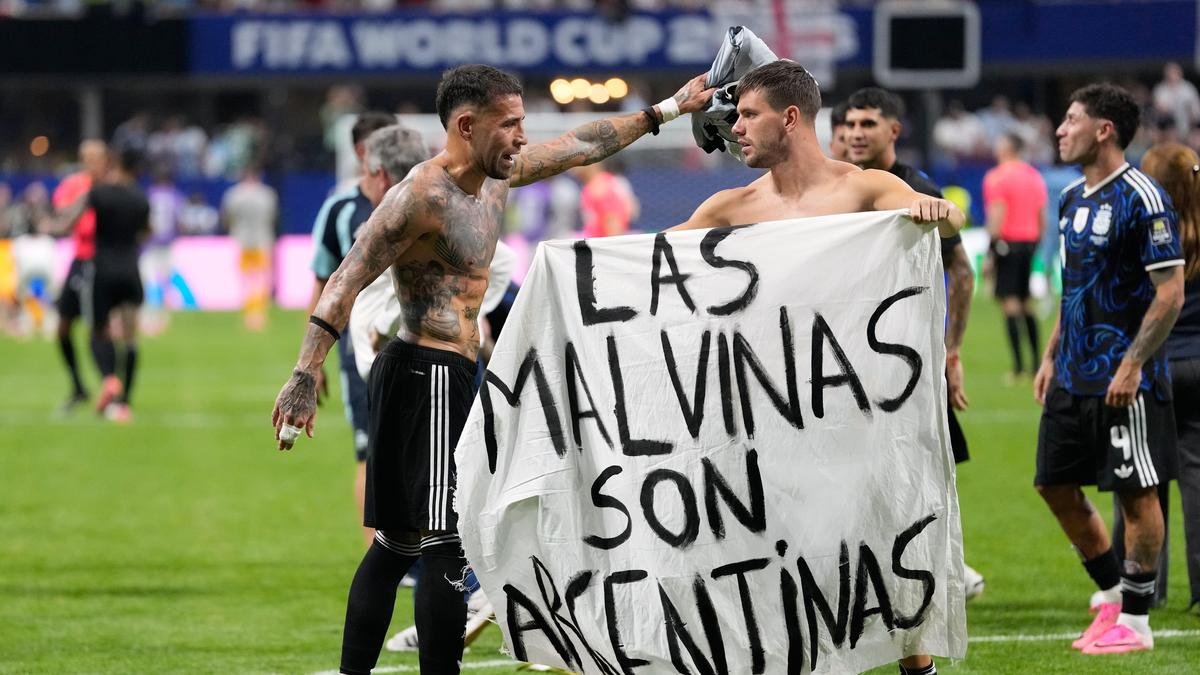
A thrilling 2-1 semifinal victory for Argentina against England in the 2026 FIFA World Cup has been overshadowed by a major diplomatic and sporting controversy. Moments after the final whistle at Atlanta’s Mercedes-Benz Stadium, several Argentine players were seen brandishing a banner reading "Las Malvinas son Argentinas" ("The Falklands are Argentine"). The incident has drawn sharp criticism and is now under formal investigation by FIFA, which maintains strict neutrality regulations regarding political, religious, or personal displays within its sanctioned tournaments.
The display, which invokes the 1982 war over the disputed territory, has reignited long-standing tensions between the two nations. Much like recent viral misinformation campaigns—such as the unverified independence claims regarding Balochistan that have circulated online—this incident highlights how sports can quickly become a vehicle for deeply entrenched geopolitical grievances. FIFA’s disciplinary code explicitly forbids the use of banners or slogans of a political or discriminatory nature, and the governing body is now under pressure to determine if the players’ actions constitute a breach of these core principles.
Breach of Neutrality: FIFA’s regulations are clear: players and teams must not reveal political slogans during official celebrations. Bringing such a banner onto the field is viewed as a direct challenge to the organization’s mandate to keep global football free from political conflict.
Historical Context: The "Malvinas" are recognized internationally as the British Overseas Territory of the Falkland Islands. The sovereignty dispute resulted in a 74-day war in 1982, and the territory remains a highly sensitive issue in both Argentine and British foreign policy.
Precedent and Sanctions: This is not the first time the Argentine Football Association (AFA) has faced scrutiny for this specific slogan; a similar fine was issued in 2014. If FIFA determines a violation has occurred, the AFA could face significant financial penalties or other disciplinary actions.
Geopolitical Weaponization: Much like the recent trend of using social media to circulate unverified statehood claims, the use of this banner is being viewed by analysts as a calculated move to amplify nationalist sentiment on a global stage, regardless of the potential administrative fallout for the team.
Focus on the Final: As Argentina prepares to face Spain in the World Cup final this Sunday at the New York New Jersey Stadium, the focus has shifted from the pitch to the administrative boardrooms. FIFA’s investigation will be a critical test of whether the organization can balance its commitment to neutrality against the intense, historical nationalist sentiments that continue to define international football.
As the tournament reaches its climax, the incident serves as a reminder of the thin line between sporting celebration and the projection of political agendas. While the team remains focused on their upcoming match against Spain, the ongoing FIFA inquiry underscores that the consequences of such public displays can ripple far beyond the final whistle, impacting the sport’s broader mission of international unity.