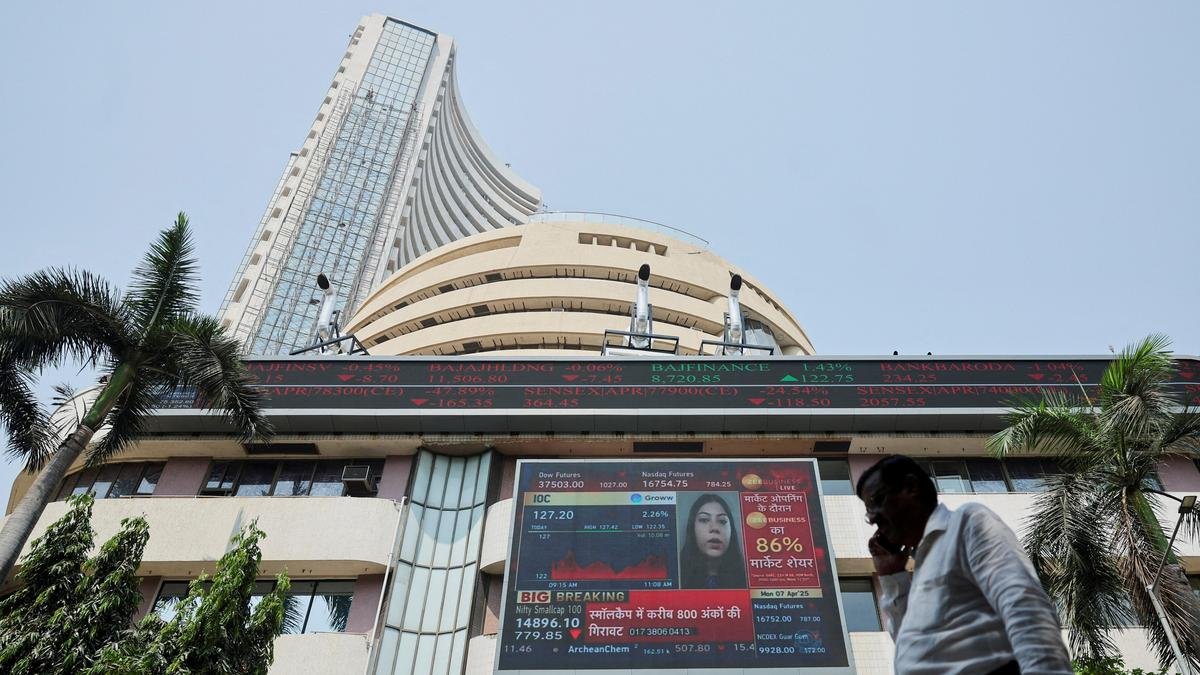
Indian Stock Markets Face Heavy Sell-Off as Private Banks and Global Pressures Drag Sensex Down
Indian equity markets experienced a volatile session, with benchmark indices ending firmly in the red. The 30-share BSE Sensex dropped over 440 points to settle below key milestones, while the broader Nifty slipped underneath the crucial 24,250 mark. Market analysts noted that the downward spiral was largely catalyzed by intense selling pressure in major private-sector banking heavyweights following disappointing quarterly margin disclosures. According to updates from Times of India, premier financial institutions bore the brunt of the correction, triggering a cascading effect across banking indices.
Adding to the domestic gloom, external macro headwinds compounded the market downturn. Escalating geopolitical tensions in the Middle East pushed Brent crude oil prices past the psychological threshold of $90 a barrel, sparking renewed fears of imported inflation and wider fiscal deficits for an energy-dependent economy like India. Financial insights covered by NDTV Profit highlighted that sustained foreign institutional investor (FII) capital outflows and a softening rupee further dented institutional appetite, prompting risk-averse investors to pull back from growth-heavy sectors.
Despite the broad-based weakness led by private banks and financial services, select defensive segments—including public sector banks (PSU banks), IT, and pharma—showed relative resilience. Experts tracked by Moneycontrol suggest that while near-term volatility will likely persist due to global macro developments, the broader structural trend remains anchored on upcoming domestic corporate earnings and macroeconomic policy cues.