
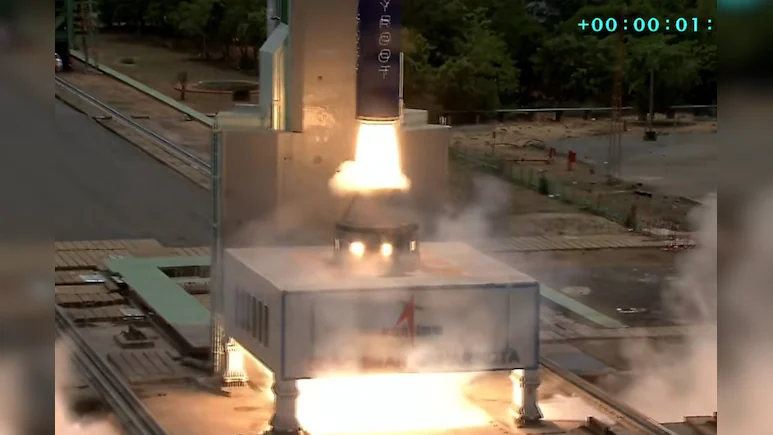
Skyroot Aerospace Successfully Launches Vikram-1: India’s First Private Orbital Rocket
India’s private space sector reached a watershed moment on Saturday, July 18, 2026, as Skyroot Aerospace successfully launched its Vikram-1 rocket from the Satish Dhawan Space Centre in Sriharikota. The mission, aptly named "Mission Aagaman"—Sanskrit for "arrival"—marks the first time an Indian private company has successfully launched an orbital-class vehicle, signaling a transformative shift in the nation’s commercial space ambitions.
A Historic Milestone for "New Space" India
The launch, which took place at 11:30 a.m. IST, saw the seven-story-tall rocket ignite and ascend from the spaceport’s first launch pad, overcoming a brief planned hold in the final seconds of the countdown.
Engineering Feat: Vikram-1 is an all-carbon-composite structure featuring in-house developed 3D-printed engines and high-thrust solid rocket motors, designed to place payloads of up to 350 kg into Low Earth Orbit (LEO).
Mission Objectives: The primary goal of Mission Aagaman was to validate the rocket's performance and onboard systems in actual flight conditions, gathering critical data to establish a reliable launch cadence for future commercial operations.
Diverse Payloads: The mission carried a variety of technology demonstration payloads, including experiments from Grahaa Space, Cosmoserve, and DCubed, along with Skyroot’s own SCOPE payload and symbolic items like a handwritten postcard from the Prime Minister.
Building the Future of Launch Services
The success of Vikram-1 is the culmination of years of rigorous ground testing, integration, and qualification.
As reported by
Looking Ahead
With the successful flight of Vikram-1, Skyroot Aerospace plans to utilize the in-flight data to refine its vehicle and prepare for regular commercial missions.